Cosori Pressure Cooker 6QT 9-in-1: A Closer Look at What This Appliance Offers
Introduction
The multicooker category has grown crowded enough that differentiation increasingly comes down to details that used to be afterthoughts — the specific coating used on the inner pot, the number of built-in safety mechanisms, or whether a brand best known for air fryers and other countertop appliances can credibly compete in a space long dominated by a handful of established pressure cooker names. That competitive pressure has generally been good news for shoppers, since it’s pushed manufacturers to pay closer attention to details like pot material and safety engineering rather than simply matching a checklist of cooking functions.
Cosori, a brand more commonly associated with air fryers, has extended into the multicooker space with a 6-quart pressure cooker built around a ceramic-coated inner pot rather than the stainless steel more commonly found in this category. That choice, combined with a fairly extensive list of built-in safety features, reflects a slightly different set of priorities than what’s typical among established multicooker lines. This article offers an independent, educational look at what this particular appliance includes, how it’s constructed, and what might be worth thinking through before it becomes part of a regular kitchen routine.
Product Overview
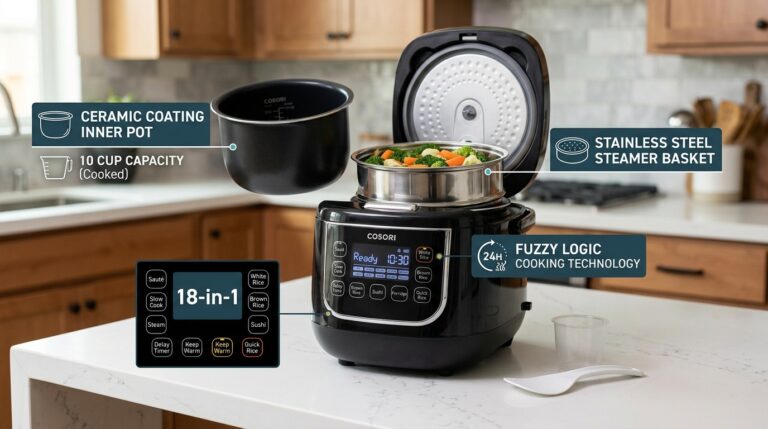
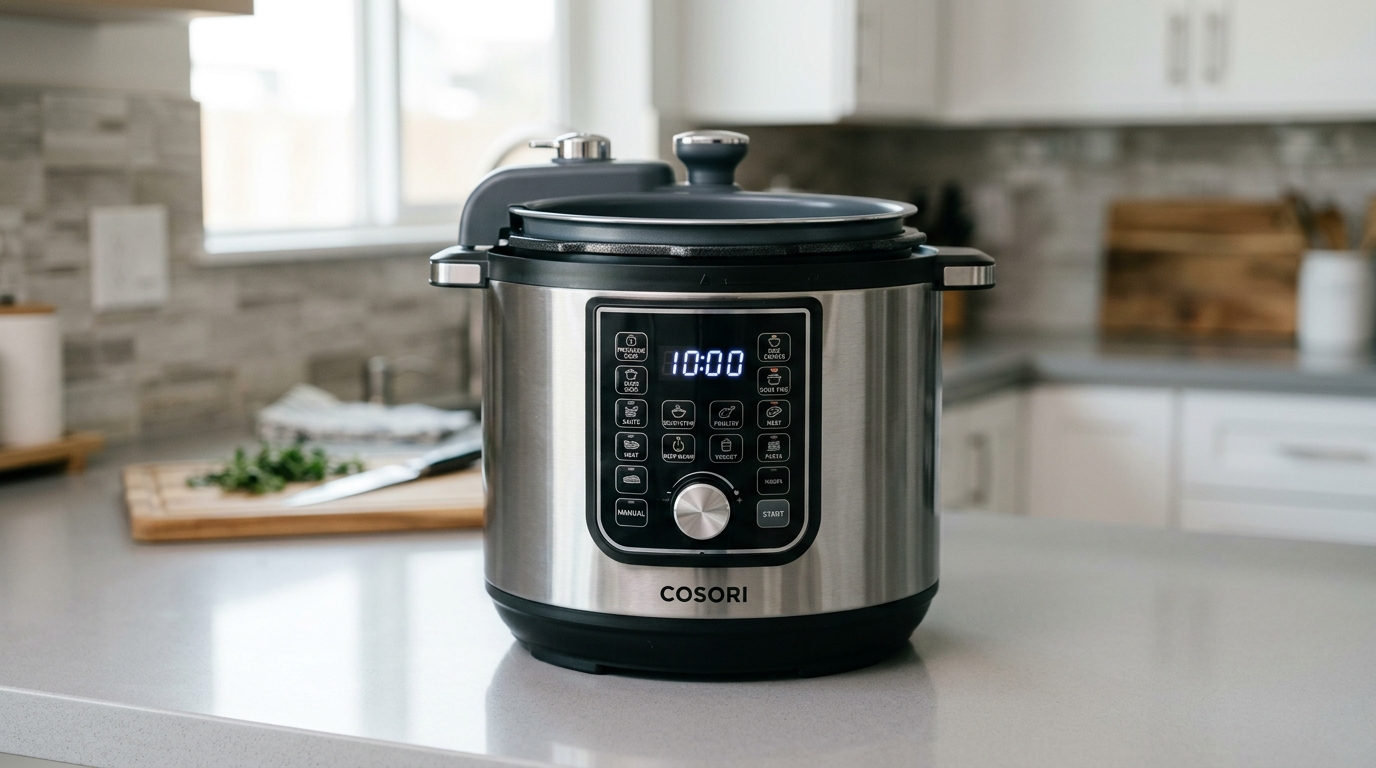
The Cosori Pressure Cooker is a 6-quart electric multicooker classified as a 9-in-1 appliance, finished in silver with a stainless steel exterior. It includes a ceramic-coated inner pot rather than the bare stainless steel pot more commonly found in competing multicooker models, alongside a 1100-watt heating element and what’s described as 12 distinct safety features built into the appliance’s design.
Its function set generally spans rice cooking, slow cooking, sous vide, sautéing, and standard pressure cooking, among other modes that make up its overall 9-in-1 classification. Its core purpose is consistent with the broader multicooker category: consolidating several distinct cooking methods into a single countertop unit, while distinguishing itself specifically through its ceramic pot coating and an emphasis on built-in safety engineering.
Key Features
Nine Built-In Cooking Functions
The appliance includes a broad function set generally covering Pressure Cook, Rice Cooker, Slow Cook, Sous Vide, Sauté, and other modes that contribute to its overall 9-in-1 classification. Each function is designed to automatically apply appropriate settings for pressure, temperature, and timing based on the mode selected.
- Pressure Cook is designed to significantly reduce cooking time for dishes like stews, beans, or tougher cuts of meat by cooking within a sealed, pressurized environment.
- Rice Cooker is designed to handle rice preparation with settings intended to produce consistent texture without requiring manual monitoring.
- Slow Cook is intended to replicate the low, extended-heat approach of a traditional slow cooker, suited to dishes that benefit from a longer cooking process.
- Sous Vide is designed to hold water at a precise, consistent temperature over an extended period, generally used for cooking sealed proteins to an even doneness without the risk of overcooking.
- Sauté allows for direct-heat cooking within the same pot, useful for browning meat or softening vegetables before switching to another function.
Ceramic-Coated Inner Pot
Rather than the bare stainless steel pot commonly found in many competing multicookers, this model uses a ceramic-coated inner pot, designed to provide a non-stick cooking surface that may reduce the amount of oil needed for certain functions like sautéing, and may also simplify cleanup compared to bare stainless steel, which sometimes requires more effort to remove stuck-on food.
12 Safety Features
The appliance is described as including 12 distinct safety features, generally intended to address various aspects of pressure cooker safety, such as lid locking mechanisms, pressure release monitoring, and temperature regulation. While specific features can vary, this kind of extensive safety-focused design is intended to provide additional reassurance for users, particularly those newer to pressure cooking as a cooking method.
1100-Watt Heating Element
The 1100-watt heating system is designed to provide the power needed to build and maintain pressure efficiently, as well as support the appliance’s other functions like sautéing and slow cooking.
Stainless Steel Exterior
The exterior housing is constructed from stainless steel, offering a fairly polished, traditional appliance appearance that may appeal to buyers who want their countertop equipment to visually coordinate with other stainless steel kitchen appliances.
6-Quart Capacity
At 6 quarts, the appliance is designed to accommodate small to medium households, generally suited to preparing meals for roughly four to six people, depending on the specific dish and portion sizes involved.
Materials and Design
The ceramic coating used in the inner pot represents one of the more distinctive construction choices on this model compared to the stainless steel pots common across much of the multicooker category. Ceramic coatings are generally chosen to provide a non-stick surface without relying on traditional PTFE-based coatings, a detail that continues to matter to buyers specifically researching alternatives to older non-stick coating chemistries. This differs meaningfully from stainless steel multicooker pots, which offer durability and scratch resistance but don’t provide the same non-stick convenience.
The sealed lid mechanism central to pressure cooking is a structural feature shared across most pressure-capable multicookers, and this model’s emphasis on 12 distinct safety features suggests additional engineering attention paid to how that lid locks, seals, and releases pressure throughout the cooking process. This kind of layered safety approach is generally intended to address the various points in a pressure cooking cycle where something could go wrong if a single safety mechanism failed on its own.
The stainless steel exterior gives the appliance a fairly traditional, polished appearance, while the control panel is generally digital, offering dedicated settings for each of the appliance’s nine functions. This layout is designed to make the various cooking modes reasonably accessible without requiring users to memorize complicated manual settings for each individual method.
Performance
Performance in a multicooker like this depends heavily on which specific function is in use, since each mode relies on a fundamentally different underlying cooking mechanism. The pressure cooking function, powered by the 1100-watt heating element, is designed to significantly reduce cooking times for foods that would otherwise take considerably longer through conventional methods, by cooking within a sealed, pressurized environment.
The sous vide function operates under an entirely different principle, prioritizing precise, consistent water temperature over an extended period rather than speed, which is a different kind of performance consideration than pressure cooking or sautéing typically require. The ceramic-coated pot may also influence performance somewhat during sautéing specifically, since a non-stick surface generally requires less oil and may behave differently than bare stainless steel when browning ingredients at higher heat.
As with any multi-function appliance, actual results will depend on factors like ingredient quantity, moisture content, and how closely a given recipe follows the guidelines associated with each specific function. Recipes written specifically for multicookers tend to produce more predictable, consistent results than dishes adapted from stovetop or oven instructions without adjustment for the different cooking approach.
Common Uses
This type of ceramic-pot, safety-focused multicooker is generally suited for:
- Weeknight meals that need to come together quickly, using the Pressure Cook function to meaningfully reduce preparation time for dishes like stews, soups, or beans.
- Everyday rice preparation, using the Rice Cooker function for consistent results without requiring stovetop monitoring.
- Extended, low-heat cooking, using the Slow Cook function for dishes prepared well ahead of mealtime.
- Precise protein cooking, using the Sous Vide function for consistent doneness on cuts of meat or fish where overcooking is a particular concern.
- Browning or sautéing ingredients with less oil, using the Sauté function alongside the ceramic-coated pot’s non-stick properties.
- Households newer to pressure cooking, particularly those who may value the appliance’s emphasis on built-in safety features as they become familiar with the cooking method.
Advantages
- Non-stick ceramic pot convenience: This may reduce the amount of oil needed for certain functions and simplify cleanup compared to bare stainless steel pots.
- Extensive built-in safety features: With 12 distinct safety mechanisms described, this appliance may offer additional reassurance for users, particularly those newer to pressure cooking.
- Sous vide capability included: Having this function built in may reduce the need for a separate dedicated sous vide immersion circulator.
- Reasonably powerful heating element: The 1100-watt system is designed to support efficient pressure buildup alongside the appliance’s other functions.
- Polished stainless steel exterior: This may appeal to buyers who prefer their countertop appliances to visually coordinate with other stainless steel kitchen equipment.
- Practical capacity for most households: The 6-quart size is generally well suited to small to medium families without requiring an oversized appliance footprint.
Things to Consider
A handful of practical points are worth reviewing before purchasing:
- Ceramic coating maintenance over time: Like most non-stick surfaces, ceramic coatings generally require gentler cleaning methods and moderate heat use to help preserve their non-stick properties, discussed further below.
- Learning curve across multiple functions: With nine distinct cooking modes, including sous vide, new users may need meaningful time to become comfortable with the full range of capabilities.
- Understanding pressure cooking safety fundamentals: Even with an extensive list of built-in safety features, familiarity with proper lid sealing and pressure release procedures remains an important part of safe, effective use.
- Ceramic versus stainless steel durability: While ceramic offers non-stick convenience, stainless steel pots are generally considered more resistant to scratching and long-term wear, which is worth weighing depending on personal priorities.
- Counter and storage space: While the appliance consolidates multiple functions into one unit, it still requires a reasonable amount of dedicated counter or storage space on its own.
Comparison with Similar Product Categories
Compared to multicookers with stainless steel inner pots, this model’s ceramic coating is generally designed to offer more non-stick convenience, particularly for sautéing, though stainless steel typically holds up better against scratching and long-term wear, especially with metal utensil use.
Compared to multicookers with a more basic set of safety features, this model’s emphasis on 12 distinct safety mechanisms may offer additional reassurance for users newer to pressure cooking, though the fundamental safety principles behind pressure cooker operation remain generally consistent across the category regardless of how many individually named features a given model includes.
Compared to multicookers without a built-in sous vide function, having this capability included may reduce the need for a separate dedicated immersion circulator, similar to how more expansive multicooker models in other brands’ lineups have approached this same addition.
Compared to established multicooker brands with a longer track record specifically in the pressure cooking space, this Cosori model represents a newer entry from a brand more commonly associated with air fryers, which may be a relevant consideration for buyers who place particular value on a brand’s specific history within this category.
Maintenance and Care
Routine maintenance can help preserve the performance and longevity of this appliance, with some additional considerations specific to its ceramic-coated pot. General care recommendations typically include:
- Allowing the unit to cool and fully release pressure before opening the lid, following the manufacturer’s specific guidance on safe pressure release procedures.
- Hand washing the ceramic-coated inner pot when possible, using a soft sponge rather than abrasive scrubbers, which can gradually wear down ceramic coatings faster than gentler cleaning methods.
- Avoiding metal utensils inside the ceramic pot, since these can scratch and degrade the non-stick surface over time; wooden or silicone utensils are generally recommended instead.
- Inspecting the sealing ring periodically for wear or damage, since this component plays a central role in maintaining proper pressure during cooking.
- Wiping down the exterior housing and control panel with a damp cloth, avoiding submerging the base unit in water since it houses electrical components.
- Checking the steam release valve regularly to ensure it remains clear of food debris, which can affect pressure regulation during cooking.
- Storing the appliance in a dry location, with the lid either off or resting loosely on the pot to help prevent trapped odors between uses.
Referring to the manufacturer’s included instructions is especially important for a pressure-capable appliance like this one, given the added safety considerations involved, and remains the most reliable way to maintain both performance and safety over its lifespan.
Frequently Asked Questions
1. What household size is this multicooker best suited for? The 6-quart capacity is generally well suited to small to medium households, roughly four to six people, depending on the specific dish being prepared.
2. How many cooking functions does this appliance include? It’s classified as a 9-in-1 appliance, generally covering pressure cooking, rice cooking, slow cooking, sous vide, sautéing, and other modes.
3. What makes the ceramic-coated pot different from stainless steel? The ceramic coating is designed to provide a non-stick cooking surface, which may reduce oil needed for certain functions and simplify cleanup compared to bare stainless steel.
4. What do the 12 safety features generally cover? While specific mechanisms can vary, this kind of extensive safety design generally addresses aspects like lid locking, pressure release monitoring, and temperature regulation throughout the cooking process.
5. Can this appliance perform sous vide cooking? Yes, the Sous Vide function is designed to hold water at a precise, consistent temperature, generally used for cooking sealed proteins to an even doneness.
6. Is the ceramic pot dishwasher safe? This can vary, so checking the specific care instructions included with the appliance is recommended, though hand washing is often advised to help preserve ceramic coatings longer.
7. How powerful is the heating element on this model? It’s built around a 1100-watt heating system, designed to support efficient pressure buildup alongside the appliance’s other cooking functions.
8. Is pressure cooking with this appliance safe for beginners? The extensive list of built-in safety features may offer additional reassurance for newer users, though understanding basic pressure cooking safety principles remains important regardless of experience level.
9. Does the ceramic coating wear down over time like other non-stick surfaces? Yes, similar to other non-stick coatings, ceramic surfaces generally degrade gradually with heavy use, high heat, or metal utensil contact, so following care guidelines can help extend its usable lifespan.
10. Can I sauté ingredients with less oil using this appliance? Yes, the ceramic-coated pot’s non-stick properties may reduce the amount of oil typically needed during the Sauté function compared to bare stainless steel.
11. How does this compare to more established pressure cooker brands? This model represents a newer entry from a brand more commonly associated with air fryers, which may be worth considering for buyers who place particular value on a brand’s specific track record within the pressure cooking category.
12. Does this appliance require any special kitchen setup? Beyond a standard countertop outlet, this appliance doesn’t generally require special kitchen modifications, though adequate counter space and clearance around the steam release valve are worth considering.
Final Thoughts
The Cosori Pressure Cooker 6QT 9-in-1 distinguishes itself within the multicooker category primarily through its ceramic-coated inner pot and its emphasis on an extensive list of built-in safety features, offering an alternative to the stainless steel construction more commonly found among established multicooker brands. With its nine cooking functions, including sous vide, 1100-watt heating element, and non-stick pot design, it’s built to serve households that value cooking convenience alongside a particular focus on safety engineering.
As with any kitchen appliance, whether this particular model fits a given household ultimately depends on factors like preference for ceramic versus stainless steel pot materials, comfort with pressure cooking generally, and how much value is placed on an extensive built-in safety feature set. Reviewing the manufacturer’s specifications and safety instructions ahead of time can help set clear, realistic expectations before use.